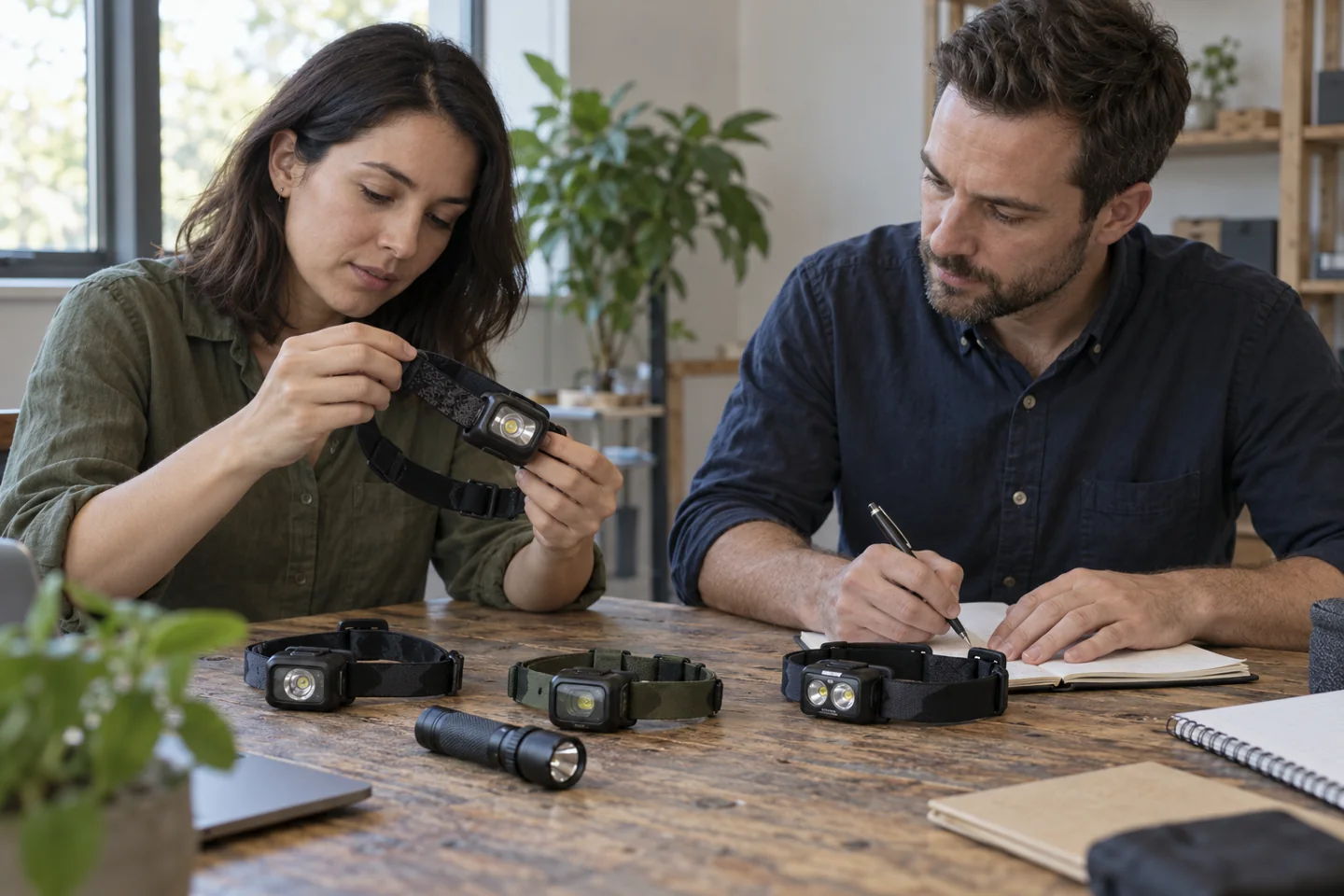
Identify the exact sample
Ask for the model code and configuration before comparing products. Similar housings may contain different batteries or LEDs. Photograph the sample label with permission and record the supplied accessories. Keep the supplier specification sheet linked to that sample, not just to a broad series name.
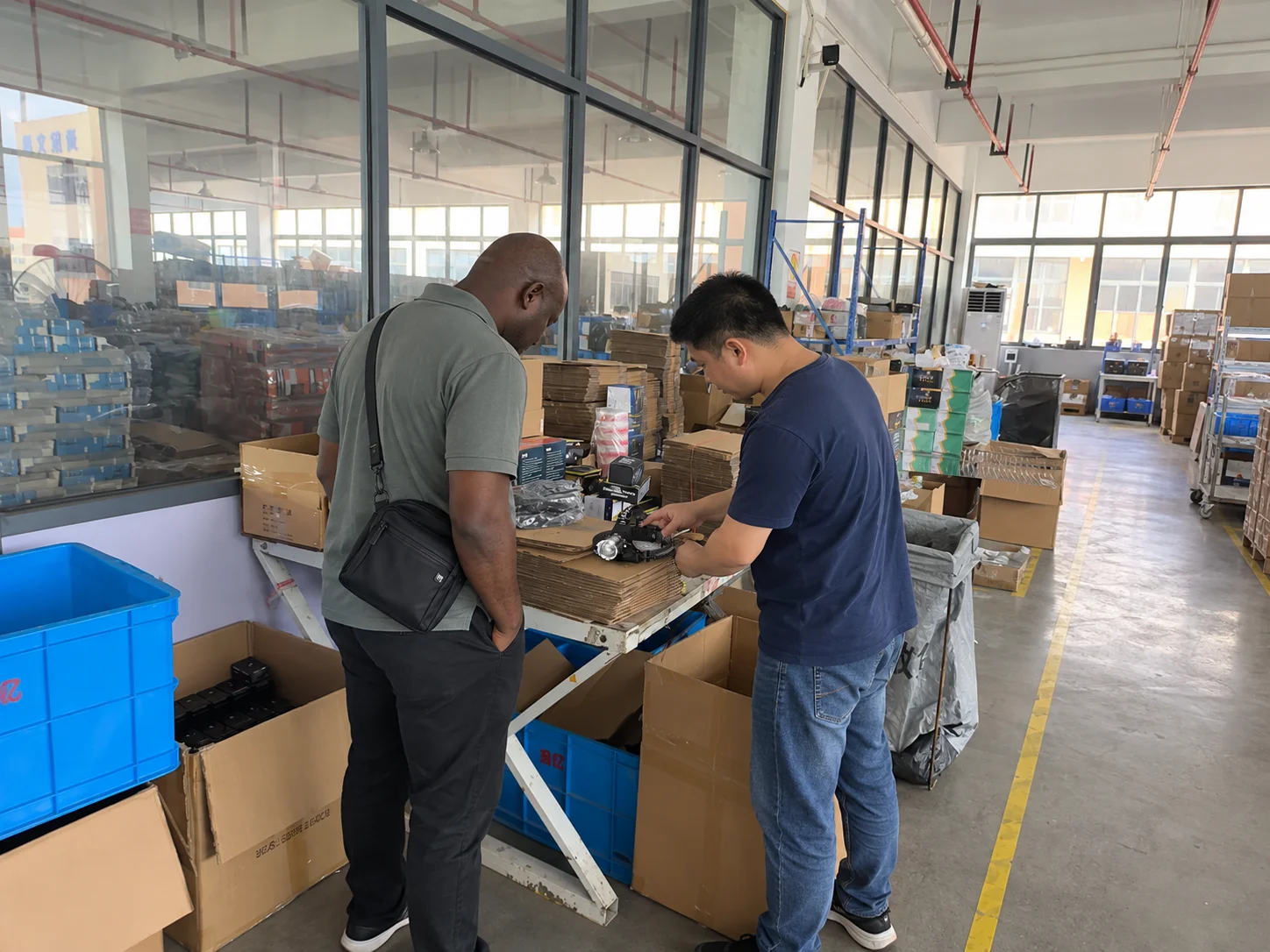
Test handling before looking at numbers
Wear the headlamp, adjust the strap and tilt the lamp toward a nearby task. Check switch access and whether the cable catches during normal movement. If your customers use gloves or glasses, include these in the trial. Record comfort feedback separately from measured weight; the distribution of weight also affects how the product feels.
Compare beams under the same conditions
Use the same target, working distance and ambient lighting. Record the selected mode and battery condition. Photographs taken with different exposure settings are poor evidence for comparing brightness. A brief demonstration cannot establish battery runtime; request a documented test for the exact configuration when runtime matters to the purchase.

Control changes after the visit
Give the agreed sample a reference number and date. List approved housing, strap, charging accessories, labels and packaging. Ask the supplier to confirm proposed changes before production. If a later sample differs, identify the change and decide whether another evaluation is needed.
What if a specification is missing?
Mark it as unconfirmed and request the relevant information. Avoid turning an assumed feature into retail copy. For example, do not describe a charging port as USB-C or a product as waterproof solely because a similar-looking model has that feature.