
Start with close-range tasks
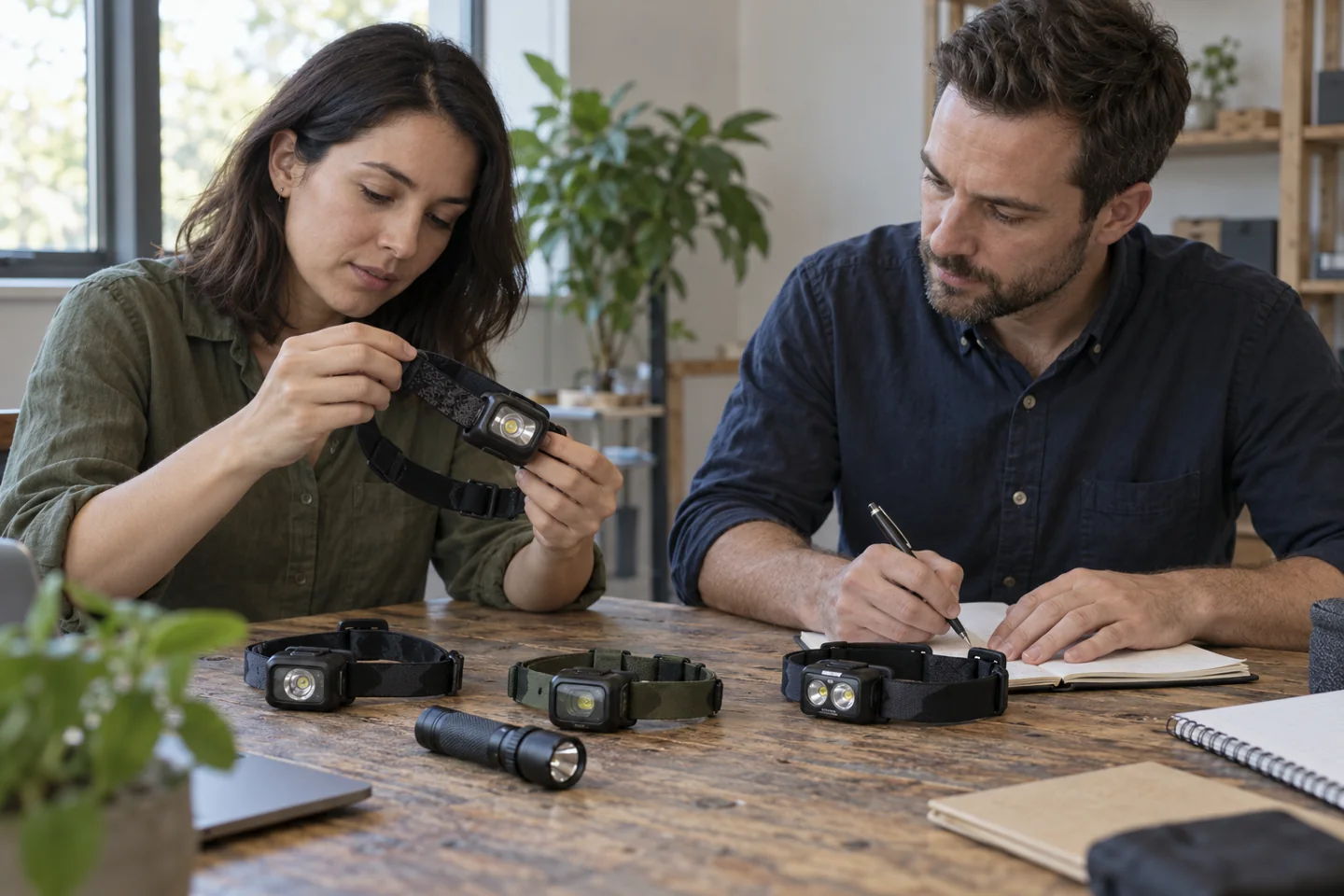
Tying line, finding small accessories and checking tackle need useful light near the hands. A narrow, intense spot may not cover the whole work area. Test the sample with the equipment and viewing distance you normally use.

Evaluate everyday operation
Try changing modes with cold hands or the gloves used on a trip. Check whether the switch sequence is easy to remember and whether the lamp tilts toward the work surface. If the model has several light colours, verify their actual operation rather than assuming they are included across a series.
Confirm environmental suitability
Ask for the exact model’s water-protection information and care instructions. A fishing photograph does not establish suitability for immersion or saltwater exposure. Keep the sample trial within the stated conditions of use.
Make the retail message specific
Show the lamp worn normally and explain the tasks it supports. Include battery configuration, supplied cable and mode information where verified. Avoid a generic “all-weather” promise when the available documentation does not establish it.
Explore relevant products
Compare the available models and confirm specifications for the exact configuration.
Related guide
Lighting RFQ checklist: the information that makes quotes comparable
Send a complete inquiry
Include the application, destination, model or reference, quantity and packaging requirements.